A tree to lean on. A flash of lightning. Turn unfamiliar shapes into scenes you can recall.
Gomademy·4 min read
KanjiMemory & SRSBeginner
Start with one shape and one useful word. This guide gives you 12 kanji picture stories, an example word with its reading for each, and a small recall routine. The stories are optional memory cues, not a promise that every character will stick immediately.
Try this first: Begin with 休, “rest.” Read its picture story, cover the meaning, then try recalling it. Next, check the word 休む(やすむ), “to rest.”
Use stories as a starting point
A small scene may give you a way to approach an unfamiliar shape. Try a story, then check whether it helps you recall the meaning. Learn the word reading separately and meet the word in real Japanese. These scenes are invented memory aids, not explanations of character history or formal lists of radicals.
12 kanji stories
Readings are selected examples, not complete lists. In 休む, the kanji is followed by the hiragana ending む; read the whole word as やすむ (yasumu). The on reading キュウ is kyū. Macrons mark long vowels.
01休
/ rest
Meaning
rest, break
Onyomi
キュウ kyū
Kunyomi
やすむ yasumu
亻 + 木 → 休
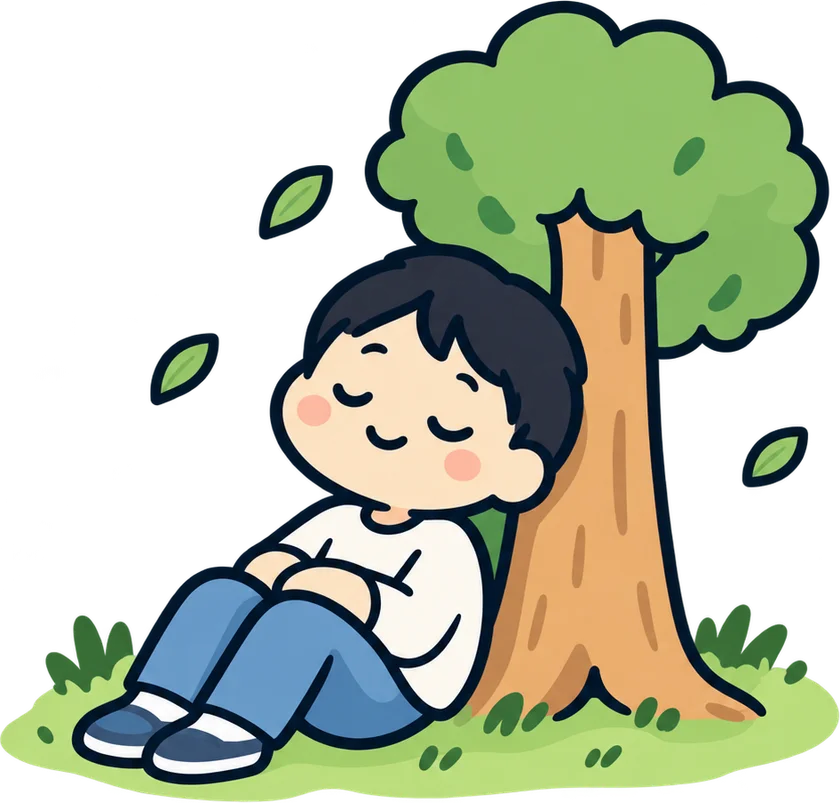
A person 亻 on the left leans on a tree 木 on the right. Shhh, eyes closed: rest.
Word:休む — やすむ(yasumu), to rest.
02電
/ electricity
Meaning
electricity, electric
Onyomi
デン den
電 → electricity
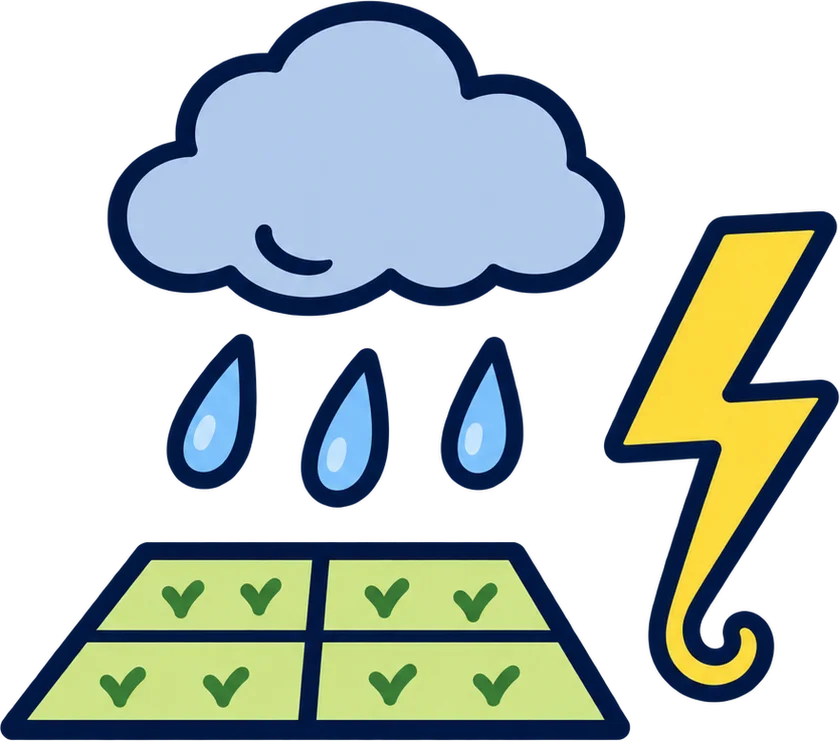
Picture rain above a field, with a flash of lightning shooting down. Use that invented scene to recall electricity; it is not a formal decomposition of the character.
Word:電気 — でんき(denki), electricity.
Extra: hiragana mini-stories
あ/ a
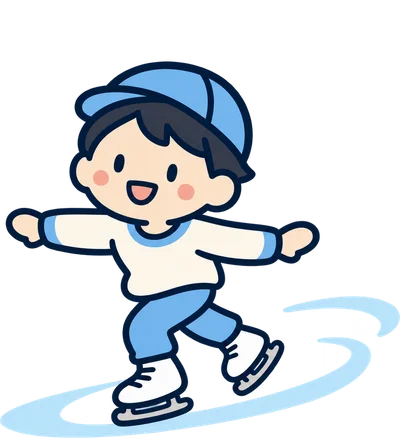
A person skating, arms out, gliding around the curve.
い/ i
Two ears, or two drops of water side by side.
Keep going
These are just 2 of the 12 kanji stories in this guide. Continue reading for more examples, practice tips, and how to remember them with SRS.
Read the full 12 kanji stories →
STORY 03
林
grove
木 + 木
Two trees stand side by side. Picture a quiet little grove, just big enough for a picnic.
Word:林 — はやし(hayashi), grove; woods.
STORY 04
森
forest
木 + 木 + 木
Add a third tree and let the trees stretch into the distance. Now you are deep in a forest.
Word:森 — もり(mori), forest.
STORY 05
明
bright
日 + 月
The sun and moon switch on together. Imagine how bright the sky would be.
Word:明るい — あかるい(akarui), bright.
STORY 06
山
mountain
three peaks
Trace three peaks with your eyes. The tallest mountain stands in the middle.
Word:山 — やま(yama), mountain.
STORY 07
川
river
three flowing lines
Three streams flow downhill together. Follow the lines along the river.
Word:川 — かわ(kawa), river.
STORY 08
口
mouth
an open square
Imagine a little square mouth opening wide to say your first Japanese word.
Word:口 — くち(kuchi), mouth.
STORY 09
人
person
two leaning strokes
Two long legs balance a person taking a careful first step.
Word:人 — ひと(hito), person.
STORY 10
大
big
a person with arms out
A person stretches both arms wide to show just how big the fish was.
Word:大きい — おおきい(ōkii), big.
STORY 11
火
fire
a rising flame
A little flame throws sparks to either side. Hear the fire crackle.
Word:火 — ひ(hi), fire.
STORY 12
水
water
a splash in motion
Picture water bursting around a central splash. Feel the cool drops on your hands.
Word:水 — みず(mizu), water.
A story starts the memory. Review keeps it.
After reading, hide the meaning and look at the kanji. Can you bring the little scene back? Say the meaning before checking. If you cannot recall it, revisit the story and try again.
Spaced repetition brings material back over time. Keep reviews manageable and connect each character to words you actually use.
These are memory aids, not historical explanations of how the characters developed. Learn readings through vocabulary and real sentences too. Read about spacing and recall practice.
Reading references: 休, 電, 林, 森 and 明るい in Kanjipedia; selected readings cross-checked with the Agency for Cultural Affairs reading data. These references do not endorse our invented scenes.

 Gomademy4 min read